Precision in motion: How DXOMARK uses PI hexapods to make image quality measurable
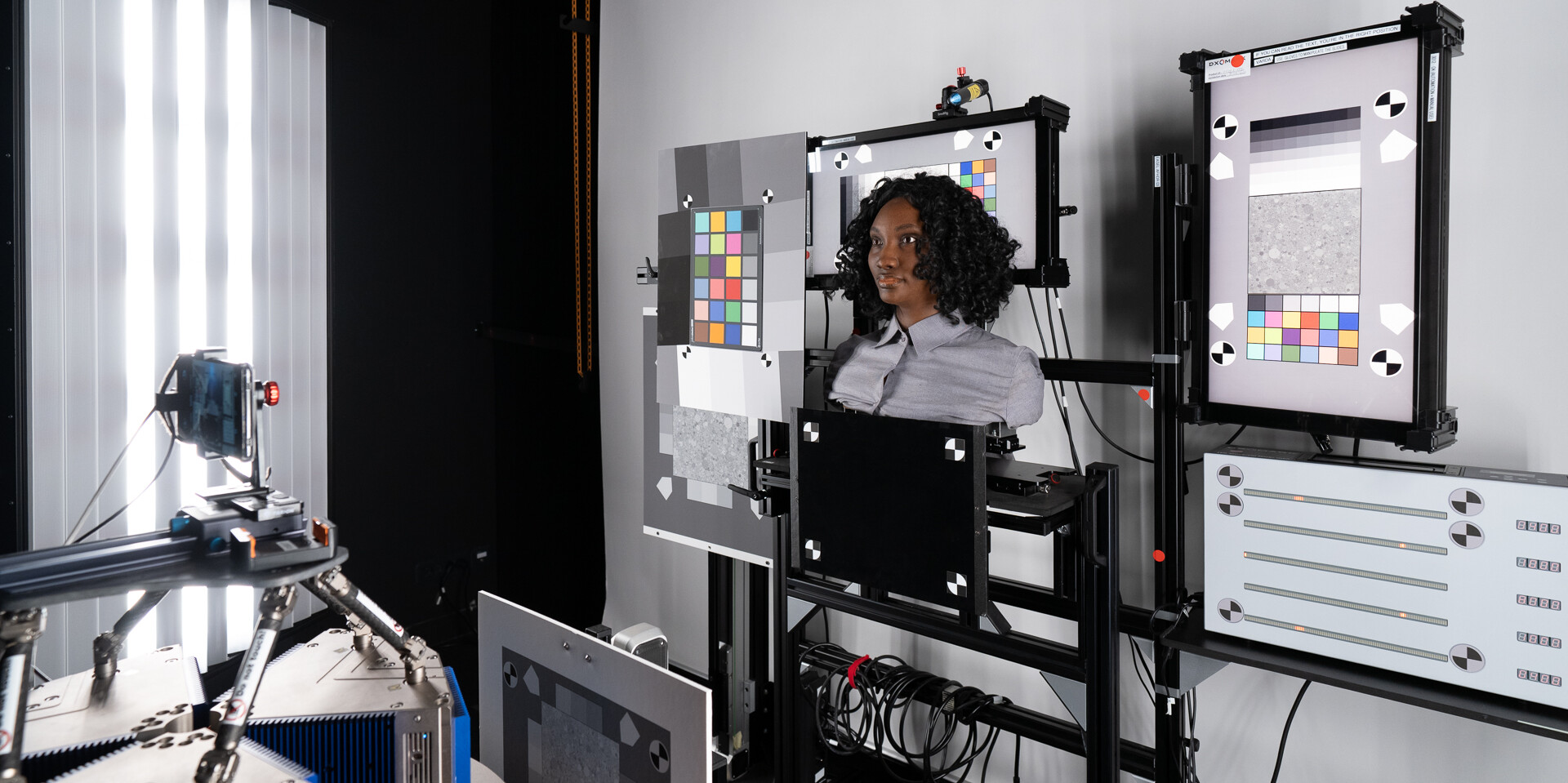
DXOMARK measures image quality under realistic conditions, making results truly comparable for the first time across devices and use cases. This is made possible by precise motion simulations from Physik Instrumente (PI), which accurately replicate real-world use in the lab.
Today’s cameras must perform reliably under a variety of conditions, for example, in low light, during motion, or in safety-critical applications, such as Advanced Driver Assistance Systems (ADAS). At the same time, expectations for image quality are constantly rising. This is precisely where DXOMARK comes in. The company develops testing methodologies and complete laboratory solutions that make the image and video quality objectively measurable. These solutions combine hardware, software, and rigorous test protocols, ensuring results are repeatable and independent of the operator.
“Measurement is only as good as the conditions you create. We work with PI because their hexapods let us replicate real-world motion with the repeatability our methodology demands, and that is ultimately what makes our evaluations meaningful to the industry,” explains Laurent Chanas, Head of the Analyzer team at DXOMARK.
The challenge is twofold. Cameras must be tested under identical conditions to ensure comparability, while the motion patterns of real-world use must be simulated as faithfully as possible, whether that means the micro-movements of a human hand or the vibrations transmitted through a vehicle chassis. To produce meaningful evaluations, thousands of images are captured and analyzed across criteria including resolution, color accuracy, exposure, and optical image stabilization performance.
To meet these complex requirements, DXOMARK relies on motion systems from PI. Hexapods, specifically the H840 and H860 models, position and move cameras with high accuracy across six degrees of freedom, allowing complex real-world motion patterns. This makes it possible to define test scenarios that are both realistic and perfectly repeatable.
“It is crucial that we work closely with the customer to fully understand the requirements and translate them into a precise motion solution,” says Emmanuel Pascal, Head of PI France.
Through this close collaboration, the systems are tailored specifically to DXOMARK’s laboratory workflows and integrated into existing test environments. Even demanding motion sequences, from subtle stabilization inputs to highly dynamic vibration profiles, can be reproduced with consistency.
The result is a new standard for image quality evaluation: measurements that are repeatable, objective, and directly comparable across products and test sessions. For camera and module manufacturers, this means access to reliable data that supports targeted development and faster iteration. For end users and industry buyers, it means benchmarks they can trust.